-
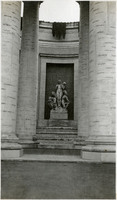 McCarthy Album 03, Photograph 033
 No Caption: Fountain of Winter (Furio Piccirilli, sculptor), in the Court of the Four Seasons at the Panama-Pacific International Exposition, 1915.
-
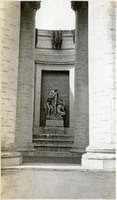 McCarthy Album 03, Photograph 032
 No Caption: Fountain of Summer (Furio Piccirilli, sculptor), in the Court of the Four Seasons at the Panama-Pacific International Exposition, 1915.
-
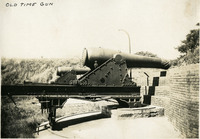 McCarthy Album 03, Photograph 031
 Caption: "Old Time Gun." at unidentified location, c. 1905.
-
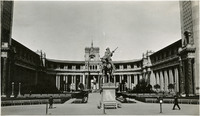 McCarthy Album 03, Photograph 030
 No Caption: The Pioneer (Solon Borglum, sculptor), at the Panama-Pacific International Exposition, 1915.
-
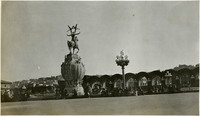 McCarthy Album 03, Photograph 029
 No Caption: Fountain of Energy (A. Stirling Calder, sculptor), at the Panama-Pacific International Exposition, 1915.
-
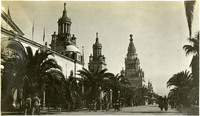 McCarthy Album 03, Photograph 028
 No Caption: Avenue of Palms at the Panama-Pacific International Exposition, 1915.
-
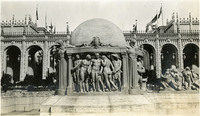 McCarthy Album 03, Photograph 027
 No Caption: Fountain of Earth (Robert I. Aitken, sculptor), at the Panama-Pacific International Exposition, 1915.
-
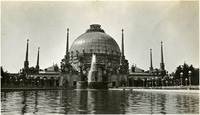 McCarthy Album 03, Photograph 026
 No Caption: Palace of Horticulture at the Panama-Pacific International Exposition, 1915.
-
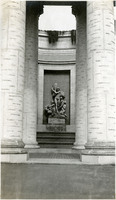 McCarthy Album 03, Photograph 025
 No Caption: Fountain of Autumn (Furio Piccirilli, sculptor), in the Court of the Four Seasons at the Panama-Pacific International Exposition, 1915.
-
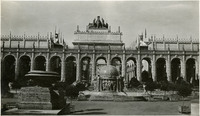 McCarthy Album 03, Photograph 024
 No Caption: Court of Abundance at the Panama-Pacific International Exposition, 1915.
-
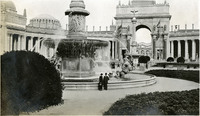 McCarthy Album 03, Photograph 023
 No Caption: Grace and William McCarthy standing alongside fountain at the Panama-Pacific International Exposition, 1915.
-
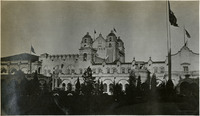 McCarthy Album 03, Photograph 022
 No Caption: The California Building at the Panama-Pacific International Exposition, 1915.
-
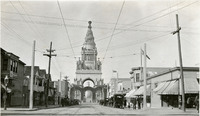 McCarthy Album 03, Photograph 021
 No Caption: Tower of Jewels, Panama-Pacific International Exposition, 1915.
-
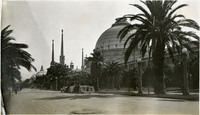 McCarthy Album 03, Photograph 020
 No Caption: The Palace of Horticulture on the right, with Fageol auto train in the foreground, at the Panama-Pacific International Exposition, 1915
-
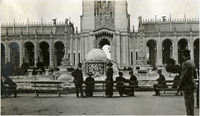 McCarthy Album 03, Photograph 019
 No Caption: William and Grace McCarthy (standing and looking at the camera) at the Panama-Pacific International Exposition, 1915. The Panama Pacific International Exposition was held to celebrate the completion of the Panama Canal, as well as inventive technologies and new industries from around the world. It was also a chance for San Francisco to show the world how the great city had rebuilt and thrived after the devastation of the 1906 earthquake and fire.
-
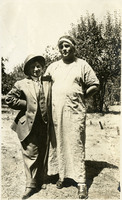 McCarthy Album 03, Photograph 018
 No Caption: See also 96-07-08-alb07-286 with caption: "Harold and Lena, Healdsburg, Aug. 15, 1915."
-
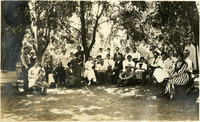 McCarthy Album 03, Photograph 017
 No Caption: See also 96-07-08-alb07-280 with caption: "Riverside Villa Aug. 15, 1915." A group of McCarthy friends and family at Riverside Villa along the Russian River in Healdsburg, Sonoma County, California, 1915.
-
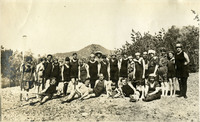 McCarthy Album 03, Photograph 016
 No Caption: See also 96-07-08-alb07-282 with caption: "Riverside Villa Aug. 15, 1915." The McCarthys (William sitting in center, with Grace eighth from the right) with friends and family at Riverside Villa along the Russian River in Healdsburg, Sonoma County, California, 1915.
-
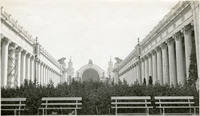 McCarthy Album 03, Photograph 015
 No Caption: Colonnades at the Panama-Pacific International Exposition, 1915. The Panama Pacific International Exposition was held to celebrate the completion of the Panama Canal, as well as inventive technologies and new industries from around the world. It was also a chance for San Francisco to show the world how the great city had rebuilt and thrived after the devastation of the 1906 earthquake and fire.
-
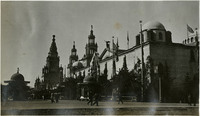 McCarthy Album 03, Photograph 014
 No Caption: Educational Building on the left, with Tower of Jewels in the background, at the Panama-Pacific International Exposition, 1915. The Panama Pacific International Exposition was held to celebrate the completion of the Panama Canal, as well as inventive technologies and new industries from around the world. It was also a chance for San Francisco to show the world how the great city had rebuilt and thrived after the devastation of the 1906 earthquake and fire.
-
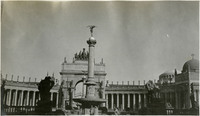 McCarthy Album 03, Photograph 013
 No Caption: Court of the Universe at the Panama-Pacific International Exposition, 1915. The Panama Pacific International Exposition was held to celebrate the completion of the Panama Canal, as well as inventive technologies and new industries from around the world. It was also a chance for San Francisco to show the world how the great city had rebuilt and thrived after the devastation of the 1906 earthquake and fire.
-
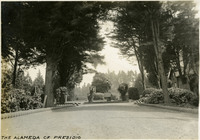 McCarthy Album 03, Photograph 012
 Caption: "The Alameda of Presidio," c. 1910. Established in 1776 by Spanish explorers, the Presidio is a fortified location overlooking the Golden Gate, the entrance into San Francisco Bay. It was closed as a military structure in 1995, and is now a park within the Golden Gate National Recreation Area.
-
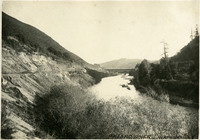 McCarthy Album 03, Photograph 011
 Caption: "Pajaro River, Watsonville," with railroad trestle in the background, c. 1910.
-
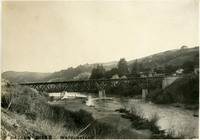 McCarthy Album 03, Photograph 010
 Caption: "Pajaro River, Watsonville," with railroad trestle spanning the river, c. 1910.
-
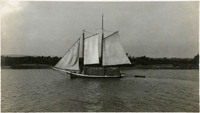 McCarthy Album 03, Photograph 009
 Caption: "Sacramento River." Pictured is a schooner with a load of hay on the Sacramento River, c. 1910.
-
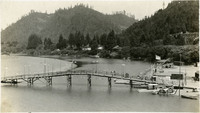 McCarthy Album 03, Photograph 008
 Caption: " Monte Rio." Boat landing and foot bridge at C.W. Meadows' place of business at Monte Rio, along the Russian River in Sonoma County, California, c. 1910.
-
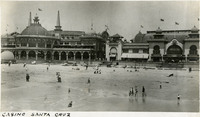 McCarthy Album 03, Photograph 007
 Caption: " Casino Santa Cruz," c. 1910, on the Santa Cruz boardwalk, opened in 1907, replacing the original 1904 casino that had burned down in 1906.
-
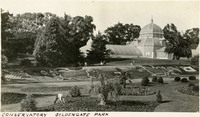 McCarthy Album 03, Photograph 006
 Caption: "Conservatory Golden Gate Park," c. 1910. shows several people about, and a groundskeeper working with plantings, San Francisco, c. 1910.
-
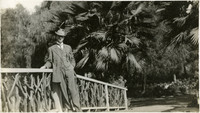 McCarthy Album 03, Photograph 005
 No Caption: An unidentified man seen standing on a foot bridge at Echo Park, Los Angeles, c. 1910.
-
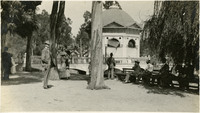 McCarthy Album 03, Photograph 004
 No Caption: People near the gazebo at Echo Park, Los Angles, c. 1910.
-
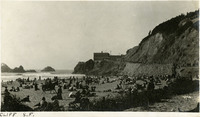 McCarthy Album 03, Photograph 003
 Caption: "Cliff S.F." The Cliff House and Ocean Beach in San Francisco shows people on the beach and walking up the road to the Cliff House, c. 1910. The photograph shows the third Cliff House built on this site, which opened in 1909, and was built with steel-reinforced concrete. The original Cliff House was built in 1863 and was destroyed by fire on Christmas day in 1894. The second, Victorian- style Cliff House was completed in 1896, and although it survived the 1906 earthquake and fires, it burned to the ground in 1907 (see 96-07-08-alb06-280).
-
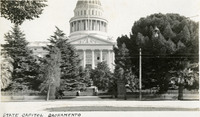 McCarthy Album 03, Photograph 002
 Caption: "State Capitol, Sacramento," c. 1910. The Capitol building in Sacramento, California. Located on the west end of Capitol Park, the neoclassical building's construction began in 1860 and was completed in 1874. It houses the state legislature and offices of the governor. The capitol and grounds were listed on the National Register of Historic Places in 1973, and as a California Historical Landmark in 1974.
-
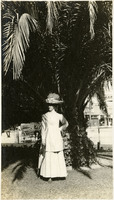 McCarthy Album 03, Photograph 001
 No Caption: Grace McCarthy standing under a palm at unidentified location, c. 1910.
-
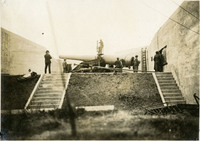 McCarthy Album 02, Photograph 084
 No Caption: See also 96-07-08-alb06-263 with caption: "12" Gun, Gun Drill," at unidentified location, c. 1905.
-
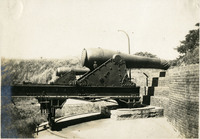 McCarthy Album 02, Photograph 083
 No Caption: See also 96-07-08-alb06-264 with caption: "U.S. Old Timers," at unidentified location, c. 1905.
-
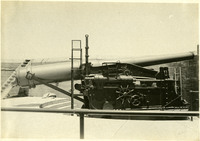 McCarthy Album 02, Photograph 082
 No Caption: See also 96-07-08-alb06-229 of drawing, with caption: "U.S. 10" Disappearing Gun & Carriage, Model 1896, Wm McCarthy, July 20, 1905." Unidentified location.
-
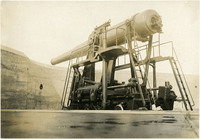 McCarthy Album 02, Photograph 081
 No Caption: See also 96-07-08-alb05-199 with caption: "12" Disappearing Gun," at unidentified location, c. 1905.
-
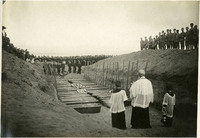 McCarthy Album 02, Photograph 080
 No Caption: See also 96-07-08-alb08-217 with caption: "Last Rites," shows a grave site with dozens of caskets ready for burial. A priest and two altar boys stand at one side of the caskets, while a large group of US Navy sailors looks on from the other side. While sailing from port in San Diego on the morning of July 21, 1905, the boiler of the USS Bennington exploded, killing sixty-six of her crew. The victims were laid to rest in the cemetery at Fort Rosecrans.
-
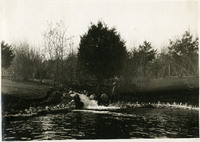 McCarthy Album 02, Photograph 079
 No Caption: See also 96-07-08-alb08-080 with caption: "City Park - Port Townsend." c. 1906.
-
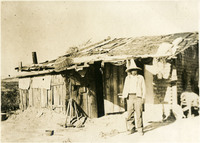 McCarthy Album 02, Photograph 078
 No Caption: See also 96-07-08-alb08-262 with caption: "Mexican Hut, Carlsbad, N.M." New Mexico, c. 1905. A view of an unidentified man standing in front of a dwelling.
-
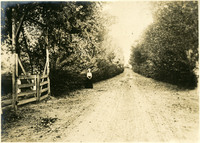 McCarthy Album 02, Photograph 077
 No Caption: See also 96-07-08-alb08-261 with caption: "Hagerman Avenue, Eddy, N.M." New Mexico, c. 1905. A view of an unidentified woman standing on the side of a dirt road.
-
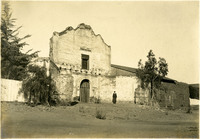 McCarthy Album 02, Photograph 076
 No Caption: See also 96-07-08-alb08-228 with caption: "Old Mission, San Diego," c. 1905. William McCarthy standing before the dilapidated church building of Mission Basilica San Diego de Alcalá (Mission San Diego). The first mission established in California, Mission San Diego was founded by Father Junipero Serra in 1769.
-
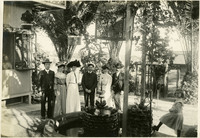 McCarthy Album 02, Photograph 075
 No Caption: See also 96-07-08-alb08-208 with caption: "Palm Garden, San Diego," A group of people standing around a fountain with William McCarthy at far right, c. 1906.
-
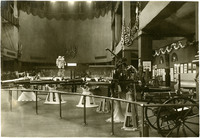 McCarthy Album 02, Photograph 074
 No Caption: See also 96-07-08-alb08-160 with caption: "Government exhibits with navy guns, Government Building." Portland Fair, Oregon, 1905. Shows a variety of naval weaponry. The exhibit was located in the Government Building of the Lewis and Clark Centennial Exposition, held in Portland, Oregon from June 1st to October 15th, 1905. The exposition celebrated the one-hundred year anniversary of the exploratory expedition of the Louisiana Purchase and what became the northwestern part of the United States, led by Meriwether Lewis and William Clark. Some 1.6 million people visited the fair, viewing exhibits from twenty-one countries.
-
 McCarthy Album 02, Photograph 073
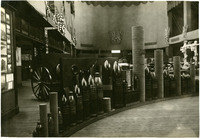
 No Caption: See also 96-07-08-alb08-159 with caption: "Government exhibits of shot etc., Government Buidling." Portland Fair, Oregon, 1905. Exhibit of various types of heavy ordnance shells, including armor piercing shells as well as torpedoes. The exhibit was located in the Government Building of the Lewis and Clark Centennial Exposition, held in Portland, Oregon from June 1st to October 15th, 1905. It celebrated the one-hundred year anniversary of the exploratory expedition of the Louisiana Purchase and what became the northwestern part of the United States, led by Meriwether Lewis and William Clark. Some 1.6 million people visited the fair, viewing exhibits from twenty-one countries.
-
 McCarthy Album 02, Photograph 072
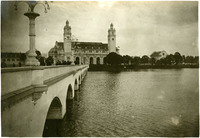
 No Caption: See also 96-07-08-alb08-158 with caption: "Government Building and Bridge of Nations, Portland Fair," Portland, Oregon, 1905. Shows the Government Building, Guild's Lake, and the Bridge of Nations, a long pedestrian bridge over the lake. Some of the more than 100,000 light bulbs used to outline the exposition's buildings can be seen along the arches and decorative molding of the bridge. The Lewis and Clark Centennial Exposition was held in Portland, Oregon from June 1st to October 15th, 1905. It celebrated the one-hundred year anniversary of the exploratory expedition of the Louisiana Purchase and what became the northwestern part of the United States, led by Meriwether Lewis and William Clark. Some 1.6 million people visited the fair, viewing exhibits from twenty-one countries.
-
 McCarthy Album 02, Photograph 071
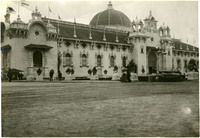
 No Caption: See also 96-07-08-alb08-156 with caption: "Agricultural Building, Portland Fair, 1905." View of the Agriculture and Horticulture Building at the Lewis and Clark Centennial Exposition. The exposition was held in Portland, Oregon from June 1st to October 15th, 1905. It celebrated the one-hundred year anniversary of the exploratory expedition of the Louisiana Purchase and what became the northwestern part of the United States, led by Meriwether Lewis and William Clark. Some 1.6 million people visited the fair, viewing exhibits from twenty-one countries.
-
 McCarthy Album 02, Photograph 070
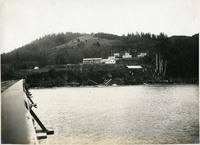
 No Caption: See also 96-07-08-alb08-140 with caption: "Fort Columbia, Wash." c. 1910. Fort Columbia, built between 1896 and 1904, sits on Chinook Point overlooking the Columbia River. It is part of the Three Fort Harbor Defense System protecting the mouth of the river from enemy incursion or attack (the other forts being Oregon's Fort Stevens and Washington's Fort Canby). Fort Columbia was decomissioned after World War II, and is now the site of a Washington State Park.
-
 McCarthy Album 02, Photograph 069
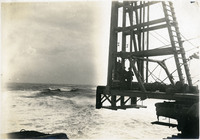
 No Caption: See also 96-07-08-alb08-145 with caption: "Pile Driver in the Breakers, Columbia River Jetty," c. 1910. View of a large pile driver used in the construction of the jetty system at the mouth of the Columbia River. This is likely at the end of the so-called South Jetty, extending more than six miles into the ocean from Point Adams on the Oregon side of the river mouth. The jetty system at the mouth of the Columbia River was constructed between 1885 and 1917. Designed to funnel water from the Columbia River in a more concentrated fashion into the Pacific Ocean, the jetty system helped create a deeper, more stable shipping channel.
-
 McCarthy Album 02, Photograph 068
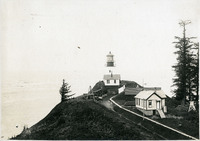
 No Caption: See also 96-07-08-alb08-153 with caption: "Fort Canby Light House, Wash." c. 1910. View of the Cape Disappointment Lighthouse on a rocky point overlooking the mouth of the Columbia River. Cannons and cannon balls are stored on the lighthouse property. Built in the 1850s, the lighthouse was electrified in 1934 and automated in 1973. The lighthouse is now part of the Cape Disappointment State Park (formerly Fort Canby State Park).