-
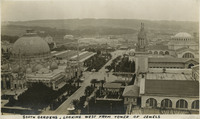 McCarthy Album 07, Photograph 047
 Caption: "South Gardens, Looking West from Tower of Jewels," at the Panama-Pacific International Exposition. See also 96-07-08-alb01-035.
-
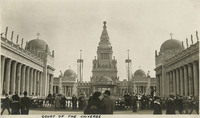 McCarthy Album 07, Photograph 046
 Caption: "Court of the Universe," shows a crowd of visitors at the Panama-Pacific International Exposition. See also 96-07-08-alb01-033.
-
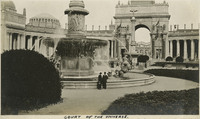 McCarthy Album 07, Photograph 045
 Caption: "Court of the Universe," with Grace and William McCarthy standing before a fountain at the Panama-Pacific International Exposition. See also 96-07-08-alb01-034.
-
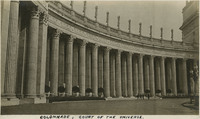 McCarthy Album 07, Photograph 044
 Caption: "Colonnade, Court of the Universe," at the Panama-Pacific International Exposition. See also 96-07-08-alb01-013.
-
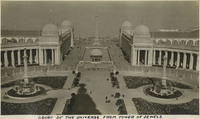 McCarthy Album 07, Photograph 043
 Caption: "Court of the Universe from Tower of Jewels," at the Panama-Pacific International Exposition. See also 96-07-08-alb01-031.
-
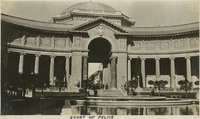 McCarthy Album 07, Photograph 042
 Caption: "Court of Palms," at the Panama-Pacific International Exposition. See also 96-07-08-alb01-030.
-
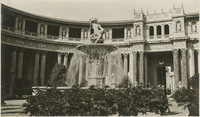 McCarthy Album 07, Photograph 041
 No Caption: See also 96-07-08-alb01-032, with caption: "Beauty and the Beast Fountain," at the Panama-Pacific International Exposition.
-
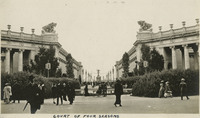 McCarthy Album 07, Photograph 040
 Caption: "Court of Four Seasons," at the Panama-Pacific International Exposition. See also 96-07-08-alb01-029.
-
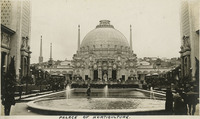 McCarthy Album 07, Photograph 039
 Caption: "Palace of Horticulture," at the Panama-Pacific International Exposition. See also 96-07-08-alb01-028.
-
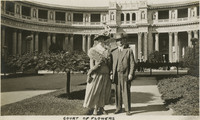 McCarthy Album 07, Photograph 038
 Caption: "Court of Flowers," William and Grace McCarthy standing in the Court of Flowers at the Panama-Pacific International Exposition.
-
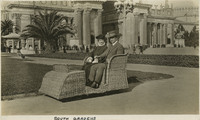 McCarthy Album 07, Photograph 037
 Caption: "South Gardens," William and Grace McCarthy riding in an electric motor chair, also known as the Osborn Electriquette, at the Panama-Pacific International Exposition. See also 96-07-08-alb01-027.
-
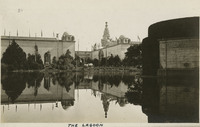 McCarthy Album 07, Photograph 036
 Caption: "The Lagoon," at the Panama-Pacific International Exposition. S ee also 96-07-08-alb07-026.
-
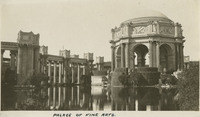 McCarthy Album 07, Photograph 035
 Caption: "Palace of Fine Arts," with reflecting pool at the Panama-Pacific International Exposition. See also 96-07-08-alb01-025.
-
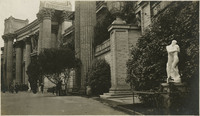 McCarthy Album 07, Photograph 034
 No Caption: Palace of Fine Arts at the Panama-Pacific International Exposition. See also 96-07-08-alb01-024.
-
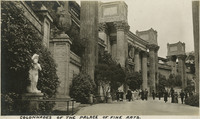 McCarthy Album 07, Photograph 033
 Caption: "Colonnades of the Palace of Fine Arts," at the Panama-Pacific International Exposition. See also 96-07-8-alb01-023.
-
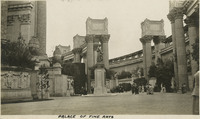 McCarthy Album 07, Photograph 032
 Caption: "Palace of Fine Arts," with several visitors viewing the statuary at the Panama-Pacific International Exposition.
-
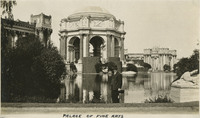 McCarthy Album 07, Photograph 031
 Caption: "Palace of Fine Arts," with William McCarthy smiling for the camera at the Panama-Pacific International Exposition. See also 96-07-08-alb03-104.
-
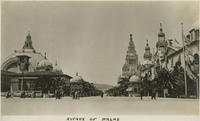 McCarthy Album 07, Photograph 030
 Caption: "Avenue of Palms," at the Panama-Pacific International Exposition.
-
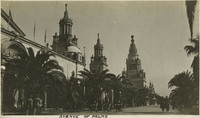 McCarthy Album 07, Photograph 029
 Caption: "Avenue of Palms," at the Panama-Pacific International Exposition.
-
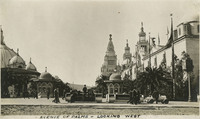 McCarthy Album 07, Photograph 028
 Caption: "Avenue of Palms - Looking West," at the Panama-Pacific International Exposition.
-
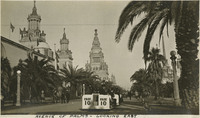 McCarthy Album 07, Photograph 027
 Caption: "Avenue of Palms - Looking East," with Fageol car, at the Panama-Pacific International Exposition. See also 96-07-08-alb03-041.
-
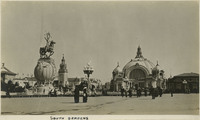 McCarthy Album 07, Photograph 026
 Caption: "South Gardens," with Fountain of Energy (A. Stirling Calder, sculptor) on the left, and Festival Hall, center right, at the Panama-Pacific International Exposition.
-
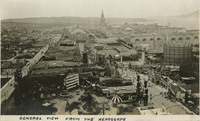 McCarthy Album 07, Photograph 025
 Caption: "General View from the Aeroscope," at the Panama-Pacific International Exposition. See also 96-07-08-alb01-018.
-
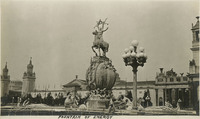 McCarthy Album 07, Photograph 024
 Caption: "Fountain of Energy," (A. Stirling Calder, sculptor), at the Panama-Pacific International Exposition. See also 96-07-08-alb01-016.
-
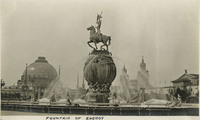 McCarthy Album 07, Photograph 023
 Caption: "Fountain of Energy," (A. Stirling Calder, sculptor), at the Panama-Pacific International Exposition. See also 96-07-08-alb01-015.
-
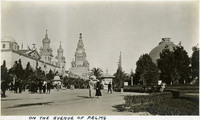 McCarthy Album 07, Photograph 022
 Caption: "On the Avenue of Palms," at the Panama-Pacific International Exposition.
-
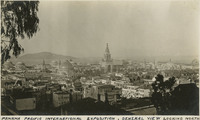 McCarthy Album 07, Photograph 021
 Caption: "Panama Pacific International Exposition, General View Looking North," at the Panama-Pacific International Exposition.
-
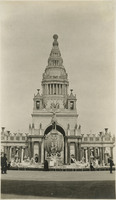 McCarthy Album 07, Photograph 020
 No Caption: Fountain of Energy (A. Stirling Calder, sculptor), with the Tower of Jewels at the Panama-Pacific International Exposition.
-
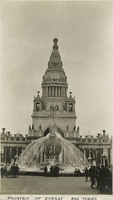 McCarthy Album 07, Photograph 019
 Caption: "Fountain of Energy and Tower," (A. Stirling Calder, sculptor), at the Panama-Pacific International Exposition.
-
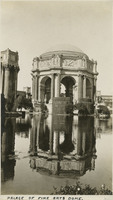 McCarthy Album 07, Photograph 018
 Caption: "Palace of Fine Arts Dome," at the Panama-Pacific International Exposition.
-
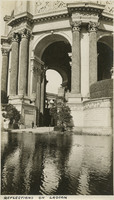 McCarthy Album 07, Photograph 017
 Caption: "Reflections on Lagoon," at the Panama-Pacific International Exposition. See also 96-07-08-alb01-011.
-
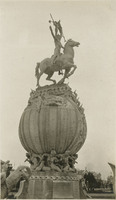 McCarthy Album 07, Photograph 016
 No Caption: The Fountain of Energy (A. Stirling Calder, sculptor), shows a side view with surrounding statuary at the Panama-Pacific International Exposition.
-
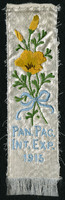 McCarthy Album 07, Photograph 015a
 No Caption: A small white commemorative bookmark with embroidered golden poppies tied with blue ribbon and blue lettering: "Pan. Pac. Int. Exp. 1915."
-
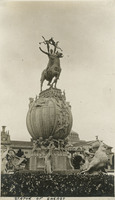 McCarthy Album 07, Photograph 015
 Caption: "Statue of Energy," The Fountain of Energy (A. Stirling Calder, sculptor), with surrounding statuary at the Panama-Pacific International Exposition. See also 96-07-08-alb01-010.
-
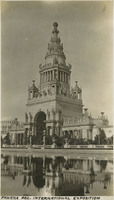 McCarthy Album 07, Photograph 014
 Caption: "Panama Pac. International Exposition." A view of the Tower of Jewels with reflecting pool at the Panama-Pacific International Exposition.
-
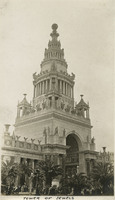 McCarthy Album 07, Photograph 013
 Caption: "Tower of Jewels," at the Panama-Pacific International Exposition. The Panama Pacific International Exposition was held to celebrate the completion of the Panama Canal, as well as inventive technologies and new industries from around the world. It was also a chance for San Francisco to show the world how the great city had rebuilt and thrived after the devastation of the 1906 earthquake and fire.
-
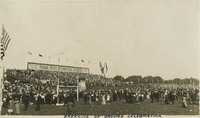 McCarthy Album 07, Photograph 012
 Caption: "Breaking of Ground Celebration," Oct 14, 1911, held in San Francisco for the planned Panama-Pacific International Exposition, which was slated to open in 1915. The Panama Pacific International Exposition was held to celebrate the completion of the Panama Canal, as well as inventive technologies and new industries from around the world. It was also a chance for San Francisco to show the world how the great city had rebuilt and thrived after the devastation of the 1906 earthquake and fire.
-
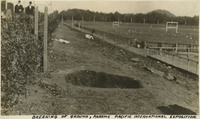 McCarthy Album 07, Photograph 011
 Caption: "Breaking of Ground, Panama-Pacific International Exposition." See also 96-07-08-alb01-006, which includes the same caption. San Francisco, Oct 14, 1911. The 1915 Panama Pacific International Exposition was held to celebrate the completion of the Panama Canal, as well as inventive technologies and new industries from around the world. It was also a chance for San Francisco to show the world how the great city had rebuilt and thrived after the devastation of the 1906 earthquake and fire.
-
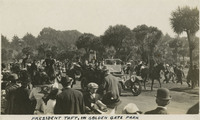 McCarthy Album 07, Photograph 010
 Caption: "President Taft in Golden Gate Park." See also 96-07-08-alb01-004, with caption: "President Taft in the Park." October 14, 1911. President William Howard Taft in San Francisco's Golden Gate Park during the groundbreaking ceremony for the Panama-Pacific International Exposition, which was slated to open January 1915.
-
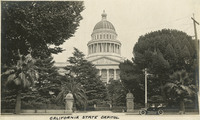 McCarthy Album 07, Photograph 009
 Caption: "California State Capitol." Shows the California State Capitol building and grounds. Located on the west end of Capitol Park, the neoclassical building's construction began in 1860 and was completed in 1874. It houses the state legislature and offices of the governor. The capitol and grounds were listed on the National Register of Historic Places in 1973, and as a California Historical Landmark in 1974. A parked automobile in the foreground has Grace McCarthy at the wheel, with William McCarthy sitting beside her, and two unidentified people in the backseat, Sacramento, c. 1915.
-
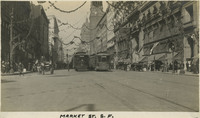 McCarthy Album 07, Photograph 008
 Caption: "Market St. S.F." Shows Market Street in San Francisco, possibly during a parade to celebrate Admission Day on September 9, when California was admitted as a state into the U.S. See also 96-07-08-alb05-136, with caption: "Market St. Sept 9, 1910 S.F."
-
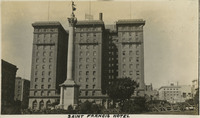 McCarthy Album 07, Photograph 007
 Caption: "Saint Francis Hotel." See also 96-07-08-alb01-002, with caption: "Hotel-Saint Francis," c. 1913. St. Francis Hotel at Union Square with partial north wing extension and the Dewey Monument in the foreground (Robert I. Aitken, sculptor), which commemorated U.S. Admiral George Dewey's naval victory at the battle of Manila Bay during the Spanish American War of 1898. The luxury hotel opened in 1904 and, fortunately, suffered little damage from the 1906 earthquake. It was expanded in 1913, and 1972, making it one of the largest hotels in the city.
-
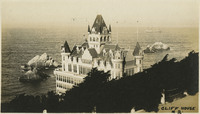 McCarthy Album 07, Photograph 006
 Caption: "Cliff House #2." View of the third Cliff House, of Victorian-style architecture, that was built on that site in San Francisco, c. 1906. The original Cliff House was built in 1858. The second was built in 1863 and was destroyed by fire on Christmas day in 1894. The third Victorian- style Cliff House (pictured) was completed in 1896, and although it survived the 1906 earthquake and fires, it burned to the ground in 1907. A fourth Cliff House was then built with steel-reinforced concrete and opened in 1909.
-
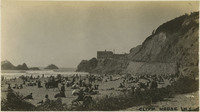 McCarthy Album 07, Photograph 005
 Caption: " Cliff House #3." View of people on Ocean Beach and walking up the road to the (fourth) Cliff House in the distance, San Francisco, c. 1910. The original Cliff House was built in 1858. The second was built in 1863 and was destroyed by fire on Christmas day in 1894. The third Victorian- style Cliff House was completed in 1896, and although it survived the 1906 earthquake and fires, it burned to the ground in 1907. A fourth Cliff House (pictured) was then built with steel-reinforced concrete and opened in 1909.
-
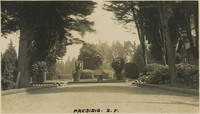 McCarthy Album 07, Photograph 004
 Caption: "Presidio S.F." See also 96-07-08-alb02-021. Entrance to the main post of the Presidio, San Francisco, c. 1910. Established in 1776 by Spanish explorers, the Presidio is a fortified location overlooking the Golden Gate, the entrance into San Francisco Bay. It was closed as a military structure in 1995, and is now a park within the Golden Gate National Recreation Area.
-
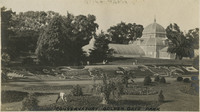 McCarthy Album 07, Photograph 003
 Caption: "Conservatory Golden Gate Park," c. 1910. See also 96-07-08-alb03-006, and 96-07-08-alb02-014. The Conservatory of Flowers in Golden Gate Park, San Francisco, originally opened in 1879. After the most recent extensive rehabilitation, the conservatory reopened in 2003 and is a city, state, and national historic landmark.
-
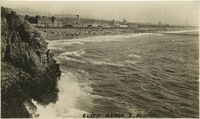 McCarthy Album 07, Photograph 002
 Caption: "Cliff Beach." Shows views of Ocean Beach near the Cliff House in San Francisco, c. 1910.
-
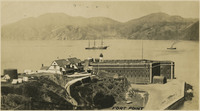 McCarthy Album 07, Photograph 001
 Caption: "Fort Point." c. 1906. See also 96-07-08-alb06-009 with caption: "Fort Point and Golden Gate," and 96-07-08-alb03-118, San Francisco. Fort Point in the foreground, with ships in the bay. Fort Point was part of an effort by the U.S. government to protect the Golden Gate, entrance to the San Francisco Bay. Built between 1853-1861 of brick and mortar, the fort included emplacements for 141 guns but never fired a weapon in defense of the Bay.
-
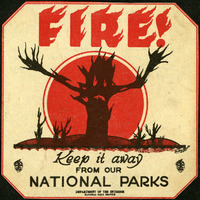 McCarthy Album 09, Photograph 321b
 This warning sticker advertises "FIRE! Keep it away form our National Parks." The silhouette of a skeletal tree stretches bare branches toward the viewer.
-
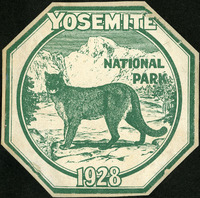 McCarthy Album 09, Photograph 321a
 A green and white decal commemorating a visit to Yosemite National Park in 1928, featuring a mountain lion against a stylized sketch of Half Dome.