-
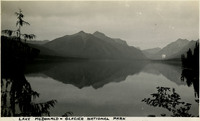 McCarthy Album 10, Photograph 154
 Caption: "Lake McDonald - Glacier National Park," c. 1935.
-
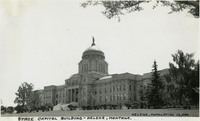 McCarthy Album 10, Photograph 153
 Caption: "State capitol building - Helena, Montana. Helena, Population 12,000," c. 1935.
-
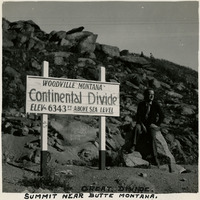 McCarthy Album 10, Photograph 152
 Caption: "Great Divide. Summit near Butte Montana," c. 1935.
-
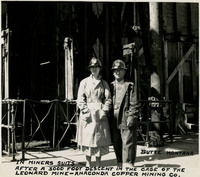 McCarthy Album 10, Photograph 151
 Caption: "Butte, Montana. In miner's suits after a 3,000 foot descent in the cage of Leonard Mine - Anaconda Copper Mining Co.," c. 1935, shows William and Grace McCarthy in miner's suits and helmets.
-
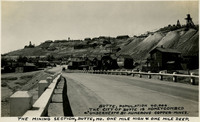 McCarthy Album 10, Photograph 150
 Caption: "Butte, population 40,000. The city of Butte is honeycombed underneath by numerous copper mines. The mining section, Butte, Mo. one mile high & one mile deep," c. 1935.
-
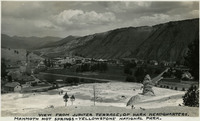 McCarthy Album 10, Photograph 149
 Caption: "View from Jupiter Terrace, of Park headquarters. Mammoth Hot Springs - Yellowstone National Park," c. 1935.
-
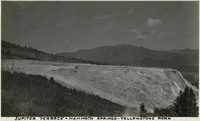 McCarthy Album 10, Photograph 148
 Caption: "Jupiter Terrace - Mammoth Springs -Yellowstone Park," c. 1935.
-
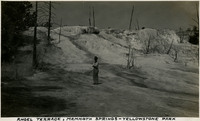 McCarthy Album 10, Photograph 147
 Caption: "Angel Terrace, Mammoth Springs - Yellowstone Park," c. 1935, shows William McCarthy standing near the travertine (limestone) terrace.
-
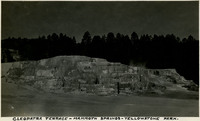 McCarthy Album 10, Photograph 146
 Caption: "Cleopatra Terrace - Mammoth Springs - Yellowstone Park," c. 1935.
-
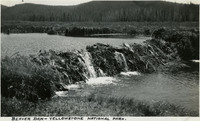 McCarthy Album 10, Photograph 145
 Caption: "Beaver Dam - Yellowstone National Park," c. 1935.
-
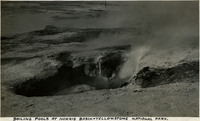 McCarthy Album 10, Photograph 144
 Caption: "Boiling Pools at Norris Basin - Yellowstone National Park," c. 1935.
-
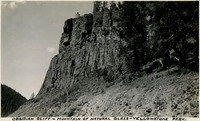 McCarthy Album 10, Photograph 143
 Caption: "Obsidian Cliff - Mountain of Natural Glass - Yellowstone Park," c. 1935.
-
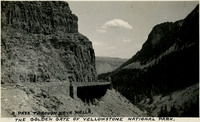 McCarthy Album 10, Photograph 142
 Caption: "A pass through lava walls. The Golden Gate of Yellowstone National Park," c. 1935.
-
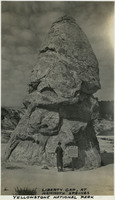 McCarthy Album 10, Photograph 141
 Caption: "Liberty Cap, at Mammoth Springs, Yellowstone National Park," c. 1935, shows Grace McCarthy standing in front of a towering travertine (limestone) rock, Liberty Cap, at Mammoth Springs, Yellowstone National Park.
-
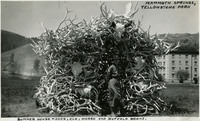 McCarthy Album 10, Photograph 140
 Caption: "Mammoth Springs, Yellowstone Park. Summer House - Deer, Elk, Moose and Buffalo horns," c. 1935, shows Grace McCarthy standing at the entrance to a hut made of many antlers, skulls, and bones from elk, deer, moose, and buffalo.
-
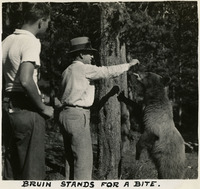 McCarthy Album 10, Photograph 139
 Caption: "Bruin stands for a bite," c. 1935, shows William McCarthy feeding a bear, while another man looks on.
-
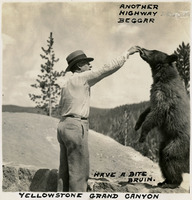 McCarthy Album 10, Photograph 138
 Caption: "Another Highway Beggar. Have a bite bruin. Yellowstone Grand Canyon," c. 1935.
-
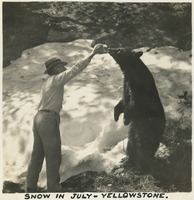 McCarthy Album 10, Photograph 137
 Caption: "Snow in July - Yellowstone," c. 1935, shows William McCarthy feeding a bear next to a pile of snow.
-
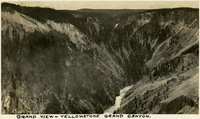 McCarthy Album 10, Photograph 136
 Caption: "Grand View - Yellowstone Grand Canyon," c. 1935.
-
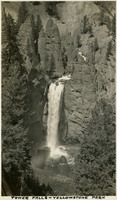 McCarthy Album 10, Photograph 135
 Caption: "Tower Falls - Yellowstone Park, " c. 1935.
-
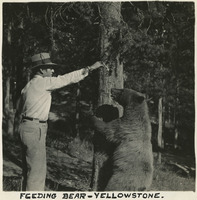 McCarthy Album 10, Photograph 134
 Caption: "Feeding Bear - Yellowstone," c. 1935, shows William McCarthy feeding a bear at Yellowstone National Park.
-
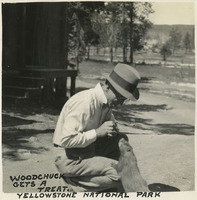 McCarthy Album 10, Photograph 133
 Caption: "Woodchuck gets a treat. Yellowstone National Park," c. 1935, shows William McCarthy feeding a woodchuck.
-
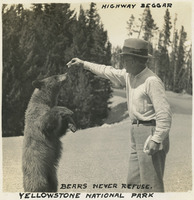 McCarthy Album 10, Photograph 132
 Caption: "Highway Beggar. Bears never refuse. Yellowstone National Park," c. 1935.
-
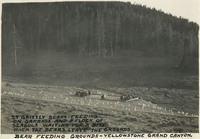 McCarthy Album 10, Photograph 131
 Caption: "29 Grizzly Bears feeding on garbage and a flock of seagulls [sic] waiting for a bite when the bears leave the grounds. Bear feeding grounds - Yellowstone Grand Canyon," c. 1935.
-
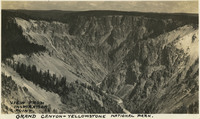 McCarthy Album 10, Photograph 130
 Caption: "View from Inspiration Point. Grand Canyon-Yellowstone National Park," c. 1935.
-
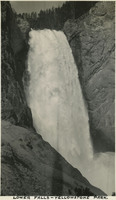 McCarthy Album 10, Photograph 129
 Caption: "Lower Falls - Yellowstone Park," c. 1935.
-
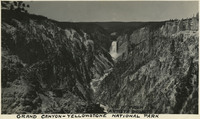 McCarthy Album 10, Photograph 128
 Caption: "Grand Canyon - Yellowstone National Park, view from artists' point," c. 1935.
-
 McCarthy Album 10, Photograph 127
 Caption: "Upper Falls -Yellowstone Grand Canyon," c. 1935.
-
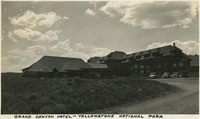 McCarthy Album 10, Photograph 126
 Caption: "Grand Canyon Hotel - Yellowstone National Park," c. 1935.
-
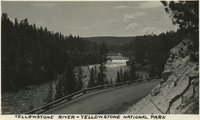 McCarthy Album 10, Photograph 125
 Caption: "Yellowstone River - Yellowstone National Park," c. 1935.
-
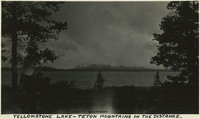 McCarthy Album 10, Photograph 124
 Caption: "Yellowstone Lake - Teton Mountains in the distance, Mount Sheridan," c. 1935.
-
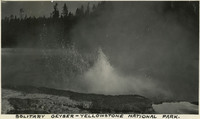 McCarthy Album 10, Photograph 123
 Caption: "Solitary Geyser-Yellowstone National Park," c. 1935.
-
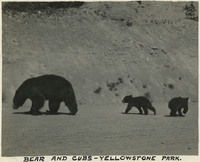 McCarthy Album 10, Photograph 122
 Caption: "Bear and Cubs - Yellowstone National Park," c. 1935.
-
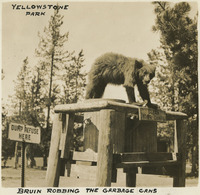 McCarthy Album 10, Photograph 121
 Caption: "Bruin robbing the garbage cans," c. 1935, shows a bear raiding garbage cans at Yellowstone National Park.
-
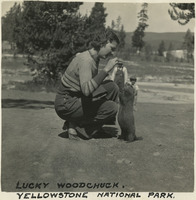 McCarthy Album 10, Photograph 120
 Caption: "Lucky Woodchuck, Yellowstone National Park," c. 1935. An unidentified woman seen feeding a woodchuck.
-
 McCarthy Album 10, Photograph 119
 Caption: "Feeding the Woodchuck - Yellowstone," c. 1935. William McCarthy feeding a woodchuck.
-
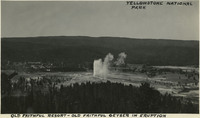 McCarthy Album 10, Photograph 118
 Caption: "Old Faithful Resort - Old Faithful Geyser in eruption, Yellowstone National Park" c. 1935.
-
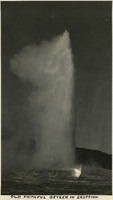 McCarthy Album 10, Photograph 117
 Caption: "Old Faithful Geyser in eruption," c. 1935.
-
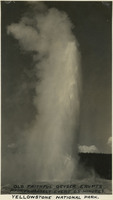 McCarthy Album 10, Photograph 116
 Caption: 'Old Faithful Geyser erupts approximately every 65 minutes. Yellowstone National Park," c. 1935.
-
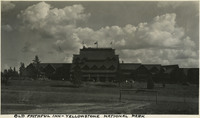 McCarthy Album 10, Photograph 115
 Caption: "Old Faithful Inn - Yellowstone National Park," c. 1935.
-
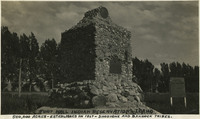 McCarthy Album 10, Photograph 114
 Caption: "Fort Hall Indian Reservation, Idaho. 500,000 acres - established in 1867 - Shoshone and Bannock Tribes," c. 1935.
-
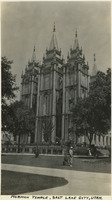 McCarthy Album 10, Photograph 113
 Caption: "Mormon Temple, Salt Lake City, Utah," c. 1935. The Salt Lake City Mormon Temple was opened in 1893 and is the largest temple (253,015 square feet) built by the Church of the Latter-day Saints.
-
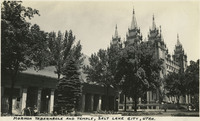 McCarthy Album 10, Photograph 112
 Caption: "Mormon Tabernacle and Temple, Salt Lake City, Utah," c. 1935.
-
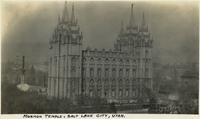 McCarthy Album 10, Photograph 111
 Caption: "Mormon Temple, Salt Lake City, Utah. Salt Lake City population 145, 500," c. 1935. The Salt Lake City Mormon Temple was opened in 1893 and is the largest temple (253,015 square feet) built by the Church of the Latter-day Saints.
-
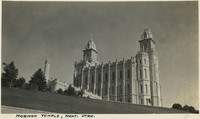 McCarthy Album 10, Photograph 110
 Caption: "Mormon Temple, Manti, Utah," c. 1935. Completed in 1888, the Manti Temple, built in Gothic Revival architectural style by the Church of the Latter-day Saints, was the third temple built west of the Mississippi River.
-
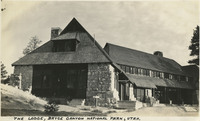 McCarthy Album 10, Photograph 109
 Caption: "The Lodge, Bryce Canyon National Park, Utah," c. 1935.
-
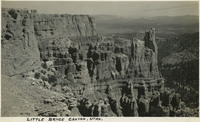 McCarthy Album 10, Photograph 108
 Caption: "Little Bryce Canyon, Utah," c. 1935.
-
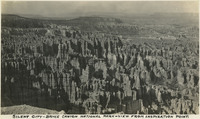 McCarthy Album 10, Photograph 107
 Caption: "Silent City-Bryce Canyon National Park - View from Inspiration Point," c. 1935.
-
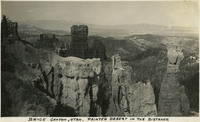 McCarthy Album 10, Photograph 106
 Caption: "Bryce Canyon, Utah. Painted Desert in the distance," c.1935.
-
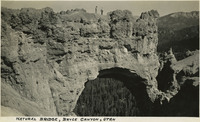 McCarthy Album 10, Photograph 105
 Caption: "Natural Bridge, Bryce Canyon, Utah," c. 1935.