-
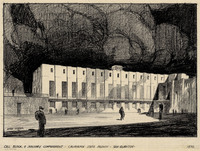 eichler_f3274_053
 Caption: "Cell Block & Solitary Confinement - California State Prison - San Quentin." Design by H. S. Hazen; drawing by Alfred Eichler. Built. Project for Department of Corrections.
-
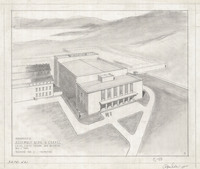 eichler_f3274_052
 Caption: "Proposed Assembly Bldg. & Chapel. Calif. State Prison San Quentin. Scheme No. 1 - Tentative. December 1, 1942." Drawing by Alfred Eichler. Not built. Project for Department of Corrections.
-
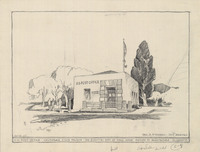 eichler_f3274_051
 Caption: "U. S. Post Office, California State Prison - San Quentin. Dept. of Public Works, Division of Architecture, Sacramento. George B. McDougall, State Architect." Design and drawing by Alfred Eichler, c. 1935. Built. Project for Department of Corrections.
-
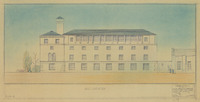 eichler_f3274_049
 Caption: "East Elevation." Rendered elevation of Scheme No. 1, addition of 4th floor to hospital building, San Quentin State Prison. Sketch in colored pencil by Alfred Eichler. Project for Department of Corrections.
-
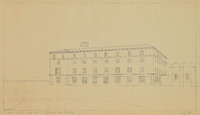 eichler_f3274_048
 Caption: "Scheme No. 3. Addition to Hospital. San Quentin." Drawing of addition of 4th floor to hospital building, San Quentin State Prison, c. 1934. As built. Project for Department of Corrections.
-
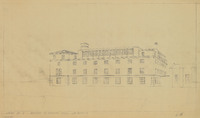 eichler_f3274_047
 Caption: "Scheme No. 2. Addition to Hospital Bldg. San Quentin." Alternate design of addition of 4th floor to hospital building, San Quentin State Prison, c. 1934. Project for Department of Corrections.
-
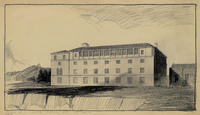 eichler_f3274_046
 Caption: "Scheme No. 1. Addition to Hospital Bldg. San Quentin." Preliminary design of addition of 4th floor to hospital building, San Quentin State Prison, c. 1934. Project for Department of Corrections.
-
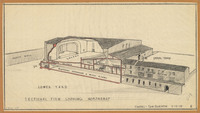 eichler_f3274_044
 Caption: "Chapel - San Quentin. Sectional View Looking Northeast." Preliminary design by Alfred Eichler, with view encompassing lower and upper yards, March 19, 1935. The chapel was ultimately built in 1960, but not as depicted here. Project for Department of Corrections.
-
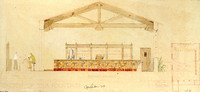 eichler_f3274_042
 Caption: "Sketch of Soda Fountain. Elevation" Color rendering by Alfred Eichler. Project for Department of Veterans Affairs.
-
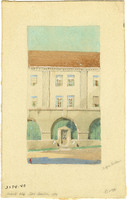 eichler_f3274_040
 Caption: "Guards Bldg. San Quentin." Design and color rendering by Alfred Eichler. Project for Department of Corrections.
-
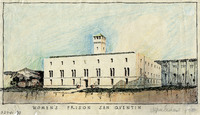 eichler_f3274_039
 Caption: "Women's Prison San Quentin." Color drawing by Alfred Eichler of Women's Building, San Quentin State Prison. Project for Department of Corrections.
-
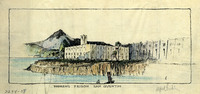 eichler_f3274_037
 Caption: "Women's Prison San Quentin." Color drawing by Alfred Eichler of Women's Building, San Quentin State Prison, c. 1926. Project for Department of Corrections.
-
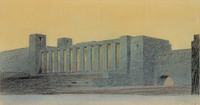 eichler_f3274_035
 Caption: "New Cell Block - Folsom State Prison. Division of Architecture, Sacramento." Color drawing of Cell Block #3, Folsom State Prison; design by Alfred Eichler, April 5, 1934. Project for Department of Corrections.
-
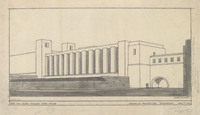 eichler_f3274_034
 Caption: "New Cell Block - Folsom State Prison. Division of Architecture, Sacramento." Preliminary drawing of Cell Block #3, Folsom State Prison; design by Alfred Eichler, April 5, 1934. Contains annotations. Project for Department of Corrections.
-
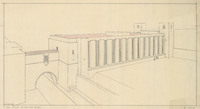 eichler_f3274_033
 Caption: "Cell Block Folsom State Prison." Drawing of Cell Block #3, Folsom State Prison; design by Alfred Eichler. Project for Department of Corrections.
-
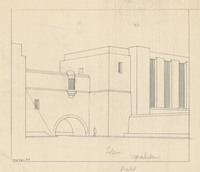 eichler_f3274_030
 Caption: "Folsom." Drawing of Cell Block #3, Folsom State Prison, by Alfred Eichler. Built in 1934. Project for Department of Corrections.
-
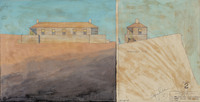 eichler_f3274_029
 Captions: "Northeast Elevation" and "Northwest Elev." Watercolor sketches by Alfred Eichler depicting elevations for preliminary design of dormitory, Folsom State Prison, c. 1933. From stamp on drawing: "Sketch, dormitory, Chinese & Negroe, Folsom State Prison." Project for Department of Corrections.
-
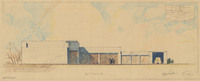 eichler_f3274_028
 Caption: "East Elevation." Sketch of garage in colored pencil by Alfred Eichler. Project for Department of Corrections.
-
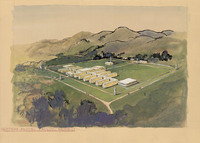 eichler_f3274_027
 Caption: "California Medical Facility, Vacaville." Painting on board; drawing created in two hours by Alfred Eichler for a newspaper.
-
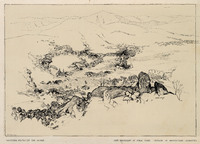 eichler_f3274_023
 Caption: "California Institution for Women. State Department of Public Works, Division of Architecture, Sacramento." Preliminary drawing of new women's prison in Tehachapi. Design and drawing in pen and ink by Alfred Eichler. Project for Department of Corrections.
-
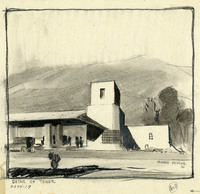 eichler_f3274_017
 Caption: "Detail of Tower." Design and drawing by Alfred Eichler. Built in 1930. This was one of the first border stations and was situated in desert country; its purpose was to provide a stopping place for inspection of motor traffic coming into California in order to enforce quarantine against insect infestation of California agricultural products. Project for Department of Agriculture.
-
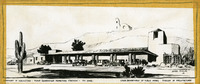 eichler_f3274_014
 Caption: "Department of Agriculture - Plant Quarantine Inspection Station - Ft. Yuma. State Department of Public Works, Division of Architecture." Design and drawing by Alfred Eichler. Built in 1930. This was one of the first border stations and was situated in desert country; its purpose was to provide a stopping place for inspection of motor traffic coming into California in order to enforce quarantine against insect infestation of California agricultural products. Project for Department of Agriculture.
-
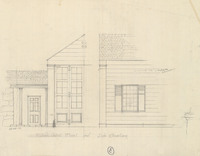 eichler_f3274_013
 Caption: "Front and Side Elevations." Design and drawing of Hornbrook border inspection station by Alfred Eichler, c. 1931. Project for Department of Agriculture.
-
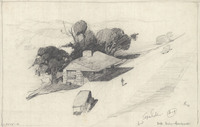 eichler_f3274_012
 Caption: " Border Station - Hornbrook." Design and sketch of plant quarantine inspection station by Alfred Eichler, c. 1931. Project for Department of Agriculture.
-
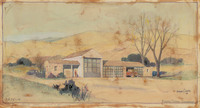 eichler_f3274_010
 Caption: "Border Station - Hornbrook." Color drawing of plant quarantine inspection station. Design and drawing by Alfred Eichler, c. 1931. Project for Department of Agriculture.
-
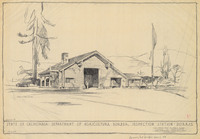 eichler_f3274_009
 Caption: "State of California - Department of Agriculture Border Inspection Station - Dorris." Design by Earl W. Hampton; drawing by Alfred Eichler. Built in 1936. Project for Department of Agriculture.
-
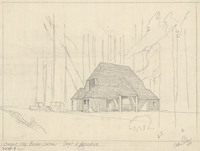 eichler_f3274_008
 Caption: "Crescent City Border Station. Dept. of Agriculture." Sketch of plant quarantine inspection station. Design and drawing by Alfred Eichler. Built in 1936. Project for Department of Agriculture.
-
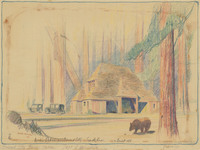 eichler_f3274_007
 Caption: "Border Station near Crescent City - Smith River. As built 1931." Design and color drawing of plant quarantine inspection by Alfred Eichler. Built in 1936. Project for Department of Agriculture.
-
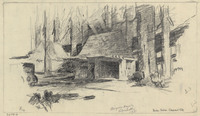 eichler_f3274_006
 Caption: "Border Station. Crescent City." Design and drawing of plant quarantine inspection station by Alfred Eichler. Built in 1936. Project for Department of Agriculture.
-
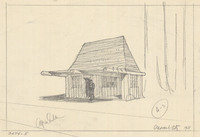 eichler_f3274_005
 Caption: "Crescent City." Design and drawing of plant quarantine inspection station by Alfred Eichler. Built in 1936. Project for Department of Agriculture.
-
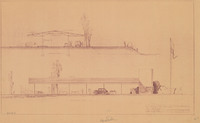 eichler_f3274_004
 Caption: "Inspection Station Blythe." Design and elevation drawing of plant quarantine inspection station by Alfred Eichler. Built in 1939. Situated in desert country. Project for Department of Agriculture.
-
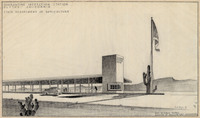 eichler_f3274_003
 Caption: "Quarantine Inspection Station, Blythe, California, State Department of Agriculture. Department of Public Works, Division of Architecture-Sacramento." Design and drawing by Alfred Eichler. Built in 1939. Situated in desert country. Project for Department of Agriculture.
-
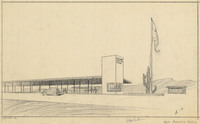 eichler_f3274_002
 Caption: "Blythe Inspection Station." Design and drawing of plant quarantine inspection station by Alfred Eichler. Built in 1939. Situated in desert country. Project for Department of Agriculture.
-
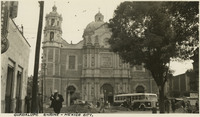 McCarthy Album 10, Photograph 454
 Caption: "Guadalupe Shrine, Mexico City."
-
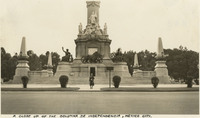 McCarthy Album 10, Photograph 453
 Caption: "A close up of the Columna de Independencia, Mexico City."
-
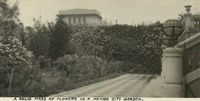 McCarthy Album 10, Photograph 452
 Caption: "A solid mass of flowers in a Mexico City garden."
-
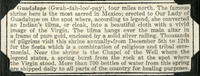 McCarthy Album 10, Photograph 451a
 No Caption: A section from an informational tourist brochure describing the Guadalupe shrine in Mexico City.
-
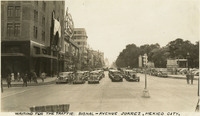 McCarthy Album 10, Photograph 451
 Caption: "Waiting for the traffic signal - Avenue Juarez, Mexico City."
-
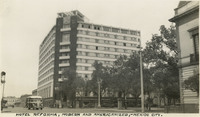 McCarthy Album 10, Photograph 450
 Caption: "Hotel Reforma, modern and Americanized, Mexico City."
-
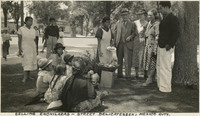 McCarthy Album 10, Photograph 449
 Caption: "Selling enchiladas - street delicatessen, Mexico City." William and Grace McCarthy (wearing hats on right side of photograph) with a group of unidentified people, some of whom are selling enchiladas.
-
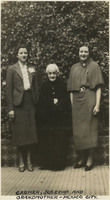 McCarthy Album 10, Photograph 448
 Caption: "Carmen, Josefina and grandmother - Mexico City."
-
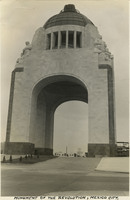 McCarthy Album 10, Photograph 447
 Caption: "Monument of the Revolution, Mexico City."
-
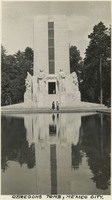 McCarthy Album 10, Photograph 446
 Caption: "Obregon's tomb, Mexico City." William and Grace McCarthy standing before the monument to General Alvaro Obregon (1880-1928), who was a leader of the Mexican Revolution (1920-1920). Obregon was elected President of post-Revolution Mexico, serving from 1920-1924. In 1928, he was again elected but was assassinated by Jose de Leon Toral, a Roman Catholic who opposed Obregon's policies on religious matters. The monument was completed in 1935 and stands in the San Angel region of Mexico City, in the same location where Obregon was assassinated.
-
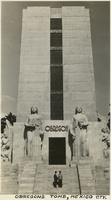 McCarthy Album 10, Photograph 445
 Caption: "Obregon's tomb, Mexico City." William and Grace McCarthy standing before the monument to General Alvaro Obregon (1880-1928), who was a leader of the Mexican Revolution (1920-1920). Obregon was elected President of post-Revolution Mexico, serving from 1920-1924. In 1928, he was again elected but was assassinated by Jose de Leon Toral, a Roman Catholic who opposed Obregon's policies on religious matters. The monument was completed in 1935 and stands in the San Angel region of Mexico City, in the same location where Obregon was assassinated.
-
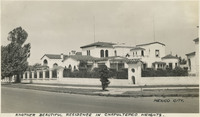 McCarthy Album 10, Photograph 444
 Caption: "Another beautiful residence in Chapultepec Heights."
-
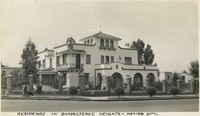 McCarthy Album 10, Photograph 443
 Caption: "Residence in Chapultepec Heights - Mexico City."
-
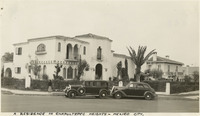 McCarthy Album 10, Photograph 442
 Caption" A residence in Chapultepec Heights - Mexico City."
-
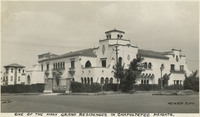 McCarthy Album 10, Photograph 441
 Caption: "One of the many grand residences in Chapultepec Heights, Mexico City."
-
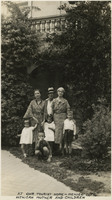 McCarthy Album 10, Photograph 440
 Caption: "Our tourist home - Mexico City. Mexican mother and children." William and Grace McCarthy are seen standing with an unidentified woman and four children, in front of the home they stayed in during their visit to Mexico City.
-
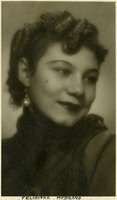 McCarthy Album 10, Photograph 439
 Caption: "Felicitas Medrano." A portrait of Felicitas Medrano, seen as the flag bearer in the Labor Day Parade in Mexico City, in photograph 96-07-08-alb10-436.