Thocmentony a.k.a. Sarah Winnemucca (1844-1891)
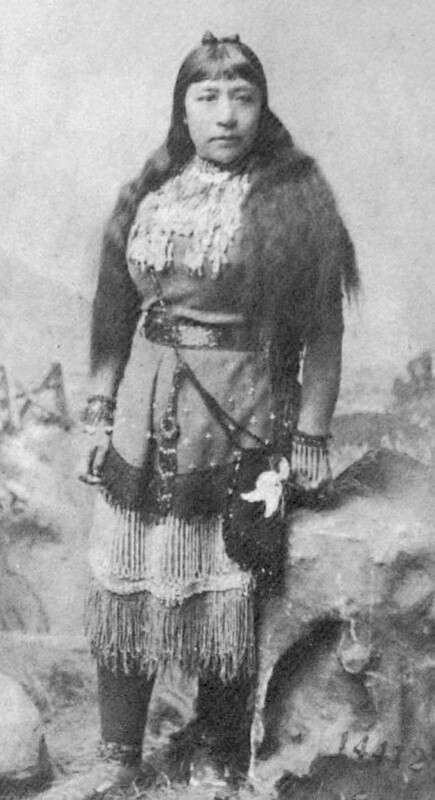
The woman often referred to in historical text as Sarah Winnemucca was born with the name Thocmentony or Tocmetone, which translates to “shellflower” in her native language of the Northern Paiute tribe in the state now called Nevada. The daughter and granddaughter of Chief Winnemucca and Chief Truckee, respectively, both of whom have Northern California cities and natural features named after them, her family befriended and assisted white colonists who passed through and occupied their tribal lands.
Winnemucca traveled to San Jose, California as a teenager to attend school, but was expelled from her classes along with other Paiute children when white parents complained to the school that Indigenous children were attending alongside their white children. Although her family had a history of helping the colonizers on their land, two different wars began between Winnemucca’s people of the Pyramid Lake Paiute and the white colonizers in the 1860s-70s. Winnemucca’s tribe was slaughtered by the United States cavalry, including Winnemucca’s mother and many other members of her family. Amidst the chaos, Winnemucca’s family moved away for a time and created a traveling show named “A Paiute Royal Family.” In 1871 Winnemucca started working as an interpreter for the Bureau of Indian Affairs and thereafter advocated for the rights of Native Americans in various ways, including lobbying the government to release Paiute people who were captured and imprisoned in a concentration camp in the state of Washington after the Bannock War. She also worked as a teacher for imprisoned Native Americans, and as a guide, interpreter, and a messenger for the federal government. She was the first known Indigenous woman to publish a book, titled Life Among the Piutes: Their Wrongs and Claims in 1883, which critiqued the government’s deeply unfair treatment of Indigenous people in the first decades of contact between her people and the colonial government. She toured part of the U.S. lecturing about her people and established a short-lived private school for indigenous children in Nevada.
Winnemucca faced criticism from both the Native and non-Native communities as she occupied a complex, contentious position between both the colonized and the colonizer forces. She used the tools and roles provided by the colonial government as a means to help protect Indigenous people from the harm enacted by governing bodies, leading to resentment at times from both sides. Today, she is remembered as a tireless advocate and agent for change for Indigenous people at a pivotal time of great turmoil.