Miné Okubo (1912-2001)
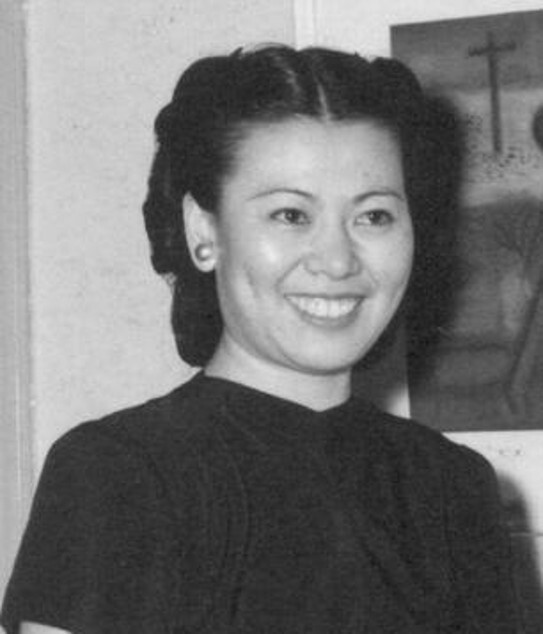
Born and raised in Riverside, CA in 1912, Mine Okubo earned a Master of Fine Arts from the University of California at Berkeley in 1938, after which she went abroad to glean inspiration from faraway lands in Italy and France to refine her artistic style under the tutelage of French artist Fernand Léger. When she returned, she was employed by several prominent government art programs in the United States, including a mural project under the Works Progress Administration that she collaborated with Mexican painter Diego Rivera on.
In 1942, Mine Okubo was detained along with the rest of her family for being identified as Japanese American and/or of Japanese descent by the United States government. The system split the family up, sending Okubo and her brother first to a camp in California and then Utah, while her father was sent to camps in Montana and then Louisiana designated for individuals the government identified as higher security threats, while her sister was sent to a separate detention facility in Wyoming. Okubo was already a college graduate and working artist at this time, and although the conditions of the camps were inhospitable, bleak, and rank with a sense of hopelessness, Okubo connected with fellow artists and seized the opportunity to learn from other artists she met and document life in the camp through her photograph and illustrated portraits. Okubo turned her vast collection of drawings documenting her everyday experiences in the camps into illustrations for her graphic novel, the text of which she wrote cataloguing her time in the camp, named Citizen 13660, which was published two years after she was released. This book became an invaluable primary source material to help outsiders to the camps and historians today understand what everyday life was like for the Japanese Americans imprisoned there.
As a prisoner for two years at the camp, Okubo depicted the sorrowful conditions of the camp and her pieces were banned in certain places after the war. Her art is a powerful testament to the enduring of the human spirit even amidst the most devastating circumstances.
To learn more about the history of the concentration camps that imprisoned Californians of Japanese descent, explore our other online exhibit, California State Government and Incarceration of Japanese Americans During World War II.