Dolores Clara Fernández Huerta (1930- )
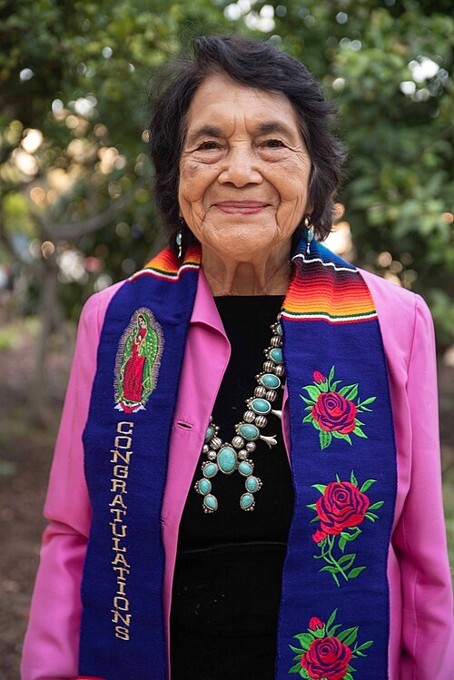
Born in 1930 in Dawson, New Mexico, Dolores Clara Fernández Huerta rose from modest beginnings to become one of the most influential labor leaders and civil rights activists in American history. After her parents divorced when she was five, her mother, Alicia Chávez, moved the family first to Las Vegas, Nevada, and later to Stockton, California. Huerta rarely saw her father again, though he later served in the New Mexico state legislature and was known as a passionate union advocate. Growing up in California’s agricultural heartland, Huerta witnessed firsthand the poverty and discrimination faced by farmworker families. She began her career as a teacher in Stockton but left the classroom in the 1950s after realizing that many of her students came to school hungry and without basic necessities. Determined to address the root causes of inequality, she turned to activism. Huerta worked for several years with the Community Service Organization (CSO), organizing Latino communities around voter registration and civic participation. In 1962, she co-founded the National Farm Workers Association (NFWA). The organization later merged with the Agricultural Workers Organizing Committee to form the United Farm Workers (UFW), a union that transformed the landscape of agricultural labor in the United States.
One of Huerta’s most significant achievements was her leadership during the 1965 Delano grape strike. She helped organize the strike and directed nationwide and East Coast boycott campaigns that brought national attention to the plight of farmworkers. Through tireless negotiation with grape growers, she helped secure contracts that provided safer working conditions, better wages, and protections against the harmful use of pesticides. Her strategic organizing and negotiating skills were instrumental in turning a local strike into a powerful national movement. Huerta is also credited by many with coining the rallying cry “¡Sí se puede!” (“Yes, you can!”), a phrase that became a defining slogan of the farmworker movement and a broader symbol of hope and collective action.
Throughout her career, Huerta faced tremendous challenges: gender discrimination within the labor movement, hostility from powerful agricultural interests, arrests during protests, and threats to her safety. Yet she persisted—balancing activism with raising eleven children—while advancing workers’ rights, immigrant rights, and women’s equality. Her legacy is one of resilience, strategic brilliance, and unwavering commitment to justice. By organizing farmworkers and building a movement grounded in dignity and collective power, Dolores Huerta helped reshape labor rights in California and across the nation, leaving an enduring mark on the struggle for civil and human rights.