Clara Shortridge Foltz (1849-1934)
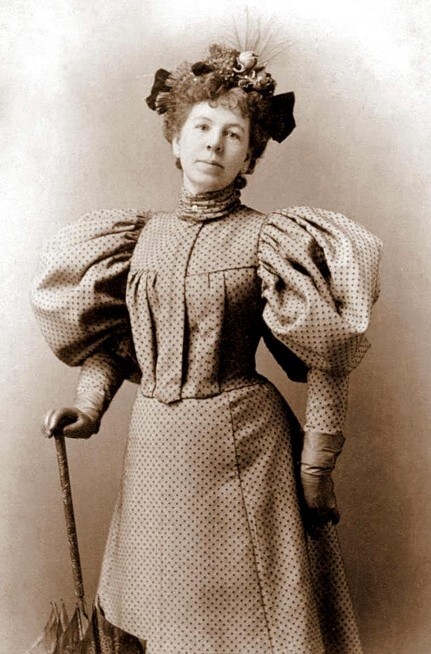
Clara Shortridge Foltz, born in Indiana in 1849, eloped when she was only 15 and bore five children during her marriage to a man ten years her senior. In the early 1870s, Foltz, her husband, and children moved to San Jose, California, where Foltz’s husband abruptly abandoned his family for his infidelity, leaving them penniless. Clara’s father had practiced law, and, although Clara had always had an interest in it, she pursued the profession out of necessity, not purely passion, as she needed to provide for herself and five children, and had exhausted the more socially accepted avenues for women to make wages of the time, including cleaning, sewing, and boarding guests.
Foltz faced daunting and numerous barriers in her pursuit of an education and career in law. From the moment she began the endeavor, she faced rejection time and time again. She sought an apprenticeship from a family friend and was swiftly rejected based on her being a woman and was told that her “place was in the home.” She found an apprenticeship with another friend of her father’s. Next, it was illegal for women to take the California Bar exam, so she authored the “Woman Lawyer Bill” and passed it after years of lobbying. And so she became the first woman to take and pass the bar and began law school at Hastings School of Law but was soon banned from class. She and her classmate Laura Gordon had both been banned from the college and together authored an amendment that was adopted in the 1879 version of the California Constitution to allow any citizen to enter “a business, profession, vocation, or employment” regardless of “sex, race, creed, color, or national or ethnic origin,” not just white males, which the law stipulated. She made it into the courtroom and started practicing law regardless of the inaccessibility of the law school, using her newfound position to champion disadvantaged women in both a male-dominated profession and society in criminal, probate, family, and corporate cases.
Responsible for creating numerous prisoner reforms and gender equality laws, Shortridge Foltz is the reason that prisoner cages were banned in the courthouse she worked in, that protective measures such as juvenile and adult prisoner separation and a supervisory matron was appointed in the county jail were put in place to lessen violence against women and children in the prison system. She also advocated for rehabilitation for incarcerated individuals.
She found the Public Defender’s Office and authored and after a 20 year battle, passed the Public Defender Bill, which became a precedent that all other states in the Union would follow. She also wrote and passed the California Parole Bill, which allowed prisoners, others than those convicted of murder, to seek parole after serving for a year. In addition, she was a lifelong, dedicated suffragette who also authored and helped pass the Women’s Vote Amendment for California that granted suffrage to Californian women in 1911.
She was not only the first woman to pass the California bar exam and the first female lawyer on the West Coast, but also the first woman appointed deputy district attorney for Los Angeles County, and furthermore, the first female district attorney in the country. She was also the first woman to run for Governor of California in 1930.