Mary Ellen Pleasants (1814-1904)
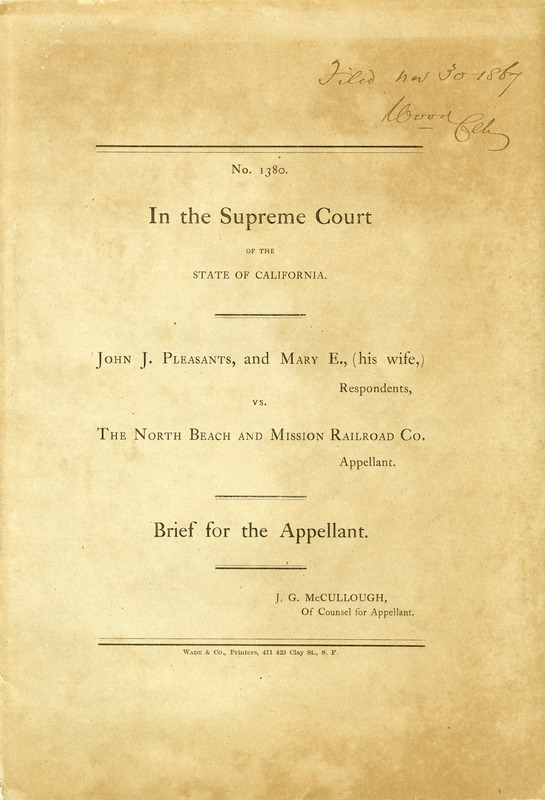
Mary Ellen Pleasants (circa 1814-1904) has been known by many sobriquets. Her tombstone calls her “the mother of civil rights in California.” The National Parks Service’s website describes her as “the most powerful Black woman in Gold Rush-era San Francisco.” W. E. B. Du Bois wrote of Pleasants in his book The Gift of Black Folk, calling her “one of the shrewdest business minds of the State...and for years was a power in San Francisco affairs.” Although many legends surround her life and deeds, on September 27, 1866, she strode unambiguously into the historical record when she tried to hail a streetcar in San Francisco. Refusing to stop and let her board, the conductor reportedly said, “We don’t take colored people in the cars.” So less than a year after the Thirteenth Amendment to the US Constitution was adopted to abolish slavery, one of California’s first civil rights pioneers began a legal odyssey that would eventually come before the state’s Supreme Court. Pleasants successfully sued the streetcar company for damages and the case outlawed segregation in the city’s public transit system. Today, the records of her case from the State Supreme Court, Pleasants v. North Beach and Mission Railroad Company (1868) 34 Cal. 586, are at the State Archives.