Governor Hiram W. Johnson and the Progressive Movement in California
The Progressive Movement transformed California politics in the early twentieth century by promoting government reform, greater public participation, and limits on the influence of powerful corporations and political machines. Women’s suffrage became part of this broader reform agenda.
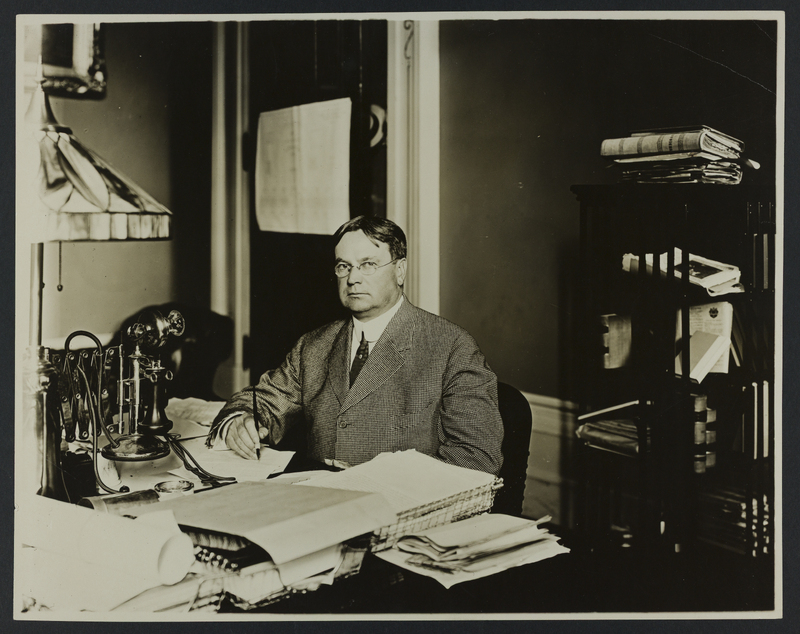
Governor Hiram Johnson (1866–1945) served as California’s 23rd governor from 1911 to 1917 and was a leading figure in the Progressive Movement. Johnson became tied to the suffrage cause through the 1910 California Republican platform, which endorsed women’s right to vote as part of a larger slate of progressive reforms. Motivated by Johnson’s promise to support their political rights, women in California quickly mobilized for him in his bid for governor, organizing grassroots efforts in support of his campaign in multiple counties. As the new governor, he insisted that the Legislature honor his pledge by submitting a women’s suffrage amendment before the Senate on January 6, 1911, only 3 days after he took office. Officially introduced as Senate Constitutional Amendment No. 8, the suffrage amendment, once passed by the Senate, would then go to California's male voters as Proposition 4 during the 1911 special election cycle.